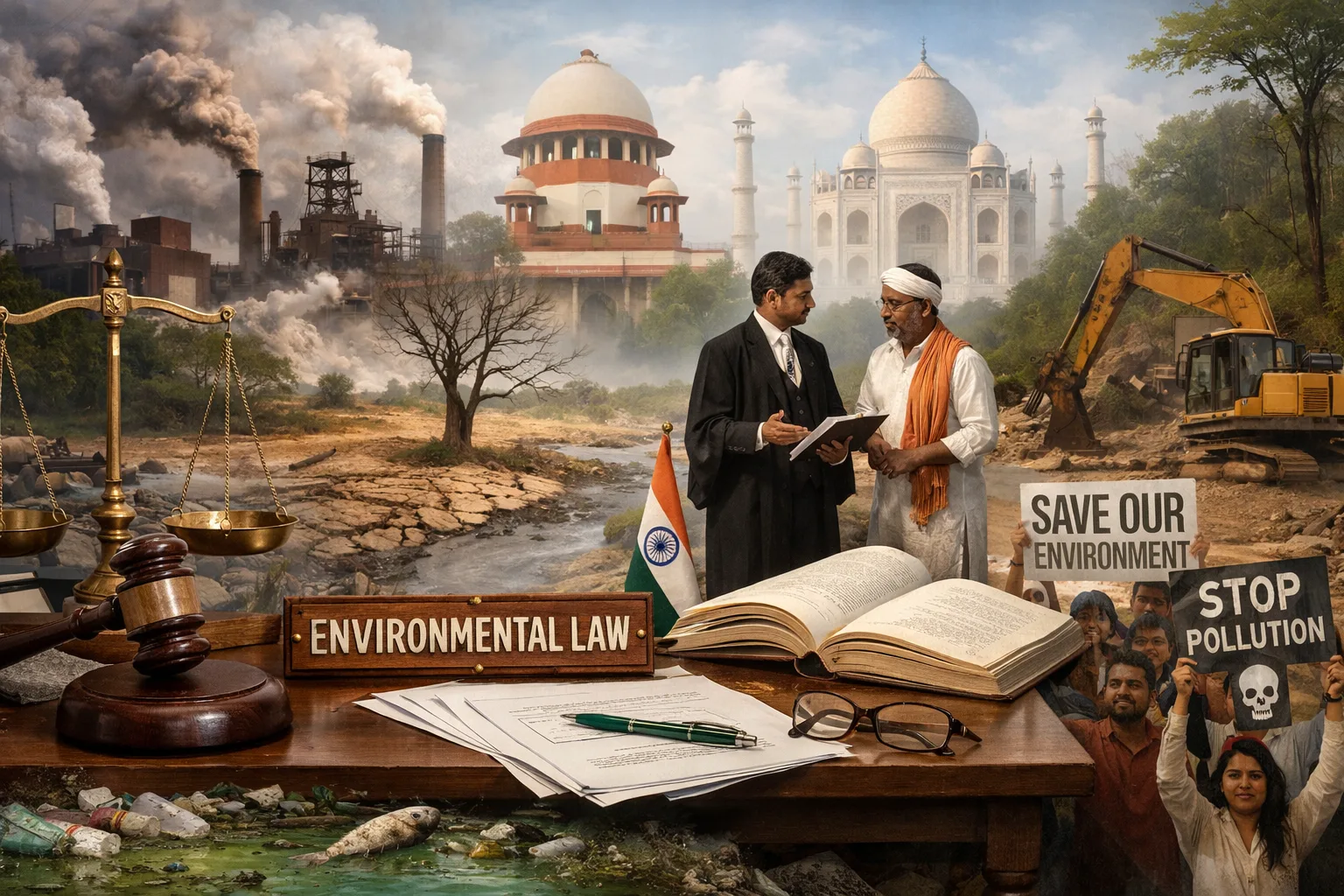
Introduction
Environmental disputes in India can involve businesses, government authorities, developers, communities, NGOs and individuals. A disagreement may begin with pollution, waste disposal, environmental clearance, industrial activity, water contamination or damage to natural resources and later become a formal legal matter. Environmental law litigation India covers a wide range of such disputes, where facts, technical evidence and environmental regulations often have to be considered together. For anyone involved in an environmental case, understanding the legal and factual background before taking action can prevent a lot of unnecessary confusion.
Environmental Disputes Are Not All the Same
One environmental dispute might concern air emissions from an industrial unit, while another could involve construction near an environmentally sensitive area or improper waste disposal. Each situation may involve different regulations, permissions and evidence. Environmental law litigation India therefore requires a case-specific approach rather than simply using the same legal argument for every environmental complaint. The location of the activity, nature of the alleged impact, applicable approvals and actions taken by regulatory authorities can all influence how a dispute should be handled.
Technical Evidence Often Becomes Important
Environmental litigation frequently involves technical information that is not easy for everyone to understand. Laboratory reports, pollution monitoring data, environmental impact assessments, inspection findings and scientific studies may become part of the record. Environmental law litigation India often requires legal professionals to work with technical material and, where necessary, understand the role of environmental experts. A report should not be treated as automatically correct or incorrect just because it contains complicated terminology. Sampling methods, dates, locations and the wider circumstances can all affect how evidence should be considered.
Regulatory Records Can Tell the Story
Many environmental disputes have a long history before they reach a court or Tribunal. There may be applications for approvals, inspection reports, notices, replies, consent documents and correspondence with government authorities. Environmental law litigation India can depend heavily on these records because they help establish what happened and how the parties responded. Keeping a proper timeline is therefore useful. A business or organisation that can quickly produce its approvals and previous correspondence is generally in a better position than one trying to reconstruct years of events from memory.
The National Green Tribunal Has a Special Role
The National Green Tribunal is a specialised forum for environmental disputes and related matters. Under its statutory framework, it deals with civil cases involving substantial environmental questions arising under specified environmental enactments and can provide relief and compensation in appropriate cases. Environmental law litigation India may therefore involve proceedings before the NGT where the subject matter falls within its jurisdiction. Understanding whether a particular dispute belongs before the Tribunal, another court or an appropriate regulatory authority is an important part of deciding the legal route.
Conclusion
Environmental litigation can affect commercial projects, public interests, natural resources and the day-to-day activities of organisations. Because these cases may involve both technical evidence and detailed legal requirements, preparation should begin with accurate facts and properly organised documents. Environmental law litigation India can involve regulatory disputes, pollution matters, environmental clearances, waste management issues and proceedings before specialised forums such as the NGT. Good legal preparation is not about making an environmental dispute sound complicated; it is about identifying the real issue, supporting important claims with reliable evidence and choosing an appropriate legal route.